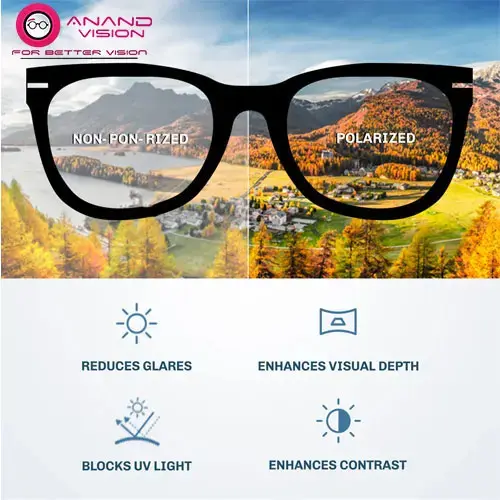
Polarised lenses are lenses that are designed to reduce glare. Polarised lenses have a coating or filter that stops horizontal light, the type of light that causes glare, getting through the lens to the eye, in turn lessening the effects of glare. Polarised lenses are most often used in sunglasses. Polarised sunglasses are beneficial for those who spend an extended period of time in high-glare environments, such as those who boat, fish or are in the snow. The advantages of polarised glasses include their ability to reduce glare, improve vision clarity, reduce eye strain and protect the eyes from the elements. The disadvantages of polarised lenses are that they are not suitable for use at night or in dim light conditions, make seeing LCD or LED screens difficult and can be more expensive than regular sunglasses.
How Do Polarised Lenses Work?
Polarised lenses work by reducing the amount of horizontal light that hits the eye, helping to reduce glare. According to the American Academy of Ophthalmology, the chemicals in a polarised tint or coating are aligned in a way that only lets vertical light in, meaning horizontal light that is bounced off of surfaces such as water and snow is filtered out by the lens reducing glare.